


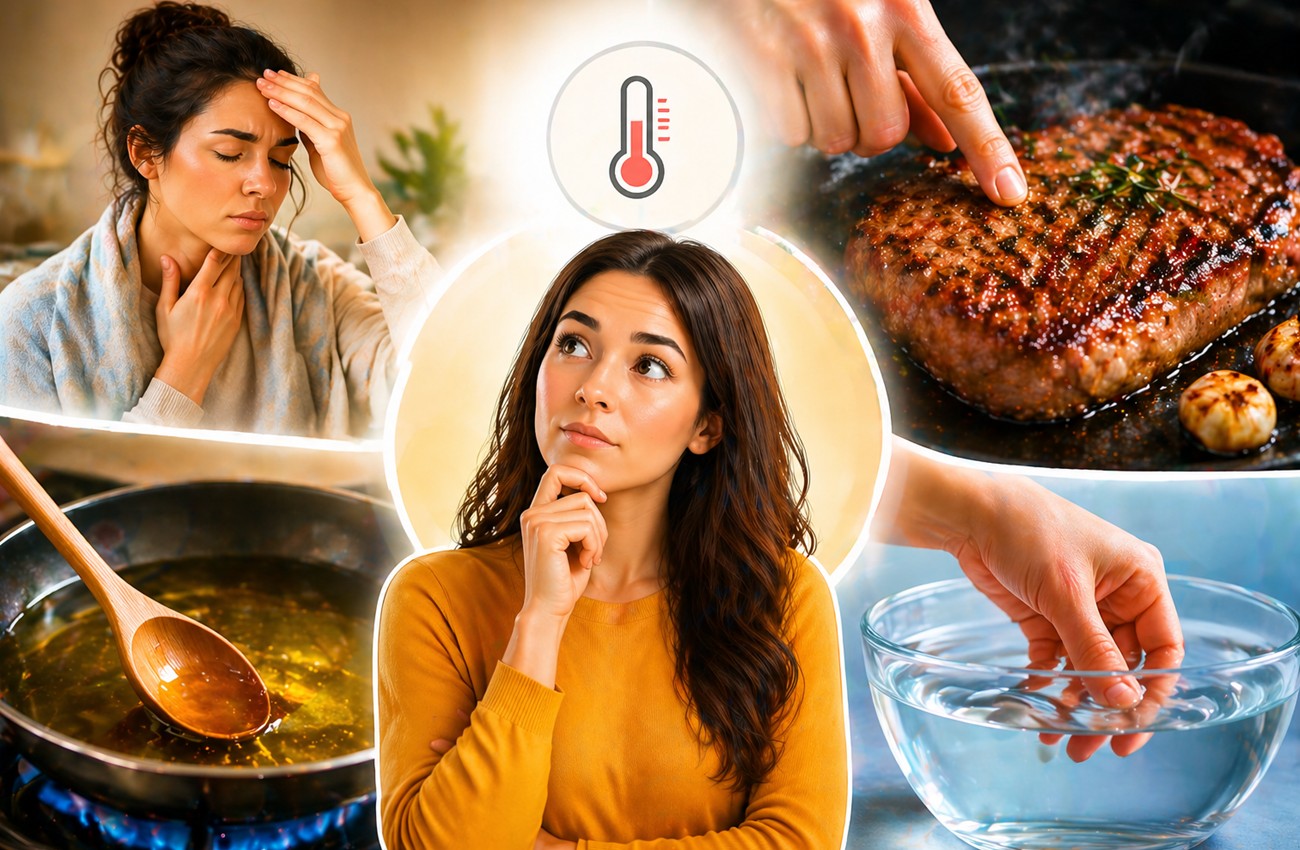
Thermometer break. Batteries die. You’re halfway through cooking dinner or nursing a sick kid at 2 a.m., and there’s no working thermometer in sight. So what do you do?
You improvise - but with a few honest limits.
Related Readings:
Can You Use a Meat Thermometer to Take Your Temperature?
Can You Use a Meat Thermometer for Candy?
How to Use a Wireless Meat Thermometer?
Can You Really Check Temperature Without a Thermometer?
Yes and no. You can get a rough idea, but they won’t give you a number you can trust. Most home cooks and parents have done this at some point. The real question isn’t whether it’s possible, but whether it’s reliable. These tricks work in a pinch. But if you check temperature often - for health or for cooking - spend bucks on a real thermometer.
|
What you’re checking |
Method |
Accuracy |
When you need a thermometer |
|
Human fever |
Back of hand on forehead / neck |
60-70% |
Infants under 3 months, anyone with confusion or stiff neck |
|
Beef steak |
Touch / finger test |
70-80% |
Ground beef or if serving young children |
|
Chicken / poultry |
Cut and check juices |
50-60% |
Always - undercooked poultry is dangerous |
|
Frying oil |
Wooden spoon bubbles or bread cube color |
70-85% |
Candy making |
|
Water for yeast |
Wrist / elbow test |
75% |
Baby formula |
How Can You Tell If You Have a Fever Without a Thermometer?
Forget what you see in movies. Here are better ways.
Method #1: The back-of-hand forehead test
Use the back of your hand, not your palm. The skin on your palm gets calloused and less sensitive. The back of your hand stays more receptive to small temperature changes. Touch your own forehead first, then touch the other person’s forehead. Does theirs feel noticeably warmer? That’s your first clue.

Method #2: The neck and chest test
The forehead can lie. The neck below the ear or the chest is a better spot. When a fever starts, blood vessels near the skin open up to release heat. That makes the neck and torso feel hotter than the forehead sometimes.

Method #3: Watch for flushed skin, glassy eyes, and chills
- Flushed cheeks or red ears - like they just ran a sprint while sitting still.
- Glassy eyes - not crying, just sort of shiny and unfocused.
- Shivering even under a blanket. That’s the body trying to generate heat before the fever peaks.

Method #4: Notice unusual behavior
A baby who usually smiles but now just stares off. A toddler who refuses their favorite snack. An adult who wants to lie down on the kitchen floor instead of walking to the couch. Those matter more than any touch test. For more detailed guidance on when to seek medical help, check the NHS's fever in adults guide.
Method #5: Count their breathing rate
Fever speeds up your heart and lungs. Count breaths for 15 seconds while they’re resting. Multiply by four. If it’s much faster than normal for that person (over 20 breaths per minute for an adult at rest), think fever.
How to Check If Meat Is Done Without a Thermometer?
This depends entirely on what meat you’re cooking.
For beef steaks and lamb chops
Press the center of the meat with your fingertip. Then compare that feel to the fleshy part of your palm below your thumb.
- Touch your thumb to your index finger. Feel the muscle under your thumb, and that’s rare.
- Thumb to middle finger - medium-rare.
- Thumb to ring finger - medium.
- Thumb to pinky - well done.
It’s not perfect, but after two or three tries, you’ll get the hang of it.

For chicken, turkey, and pork
This one makes people nervous for good reason. Poultry needs to hit 165°F (74°C) inside. You can’t see that temperature. But if you have no other choice:
Cut into the thickest part - the breast or thigh. Pull the meat apart with two forks.
- Chicken is likely done if: the meat is completely white (no pink), the juices run clear (not pink or red), and the fibers separate easily when you pull.
- Chicken is not done if: any pink remains near the bone, the juices have a reddish tint, or the texture feels slippery or rubbery.
The problem: some chicken stays slightly pink even when fully cooked (especially if it’s air‑chilled or from a young bird). So this method is risky. For ground poultry - never guess. Use a meat thermometer instead. Cook it until it’s steaming throughout and the texture is firm.

How to Check Oil Temperature Without a Thermometer?
You’re making fried chicken or doughnuts. No candy thermometer. What do you do?
The wooden spoon test
Stick the handle of a clean wooden spoon into the oil. If tiny bubbles immediately form around the wood and rise slowly, the oil is around 350°F - perfect for most frying. No bubbles? Too cold. Violent, fast bubbles with smoke? Too hot.

The bread cube test
Drop a one-inch cube of white bread into the oil. Time it with a phone or just count.
- Takes 60 seconds to turn golden brown: 350°F. Good for fried chicken, fish, donuts.
- Takes 40 seconds: 365°F. Good for french fries.
- Takes 20-30 seconds: 380°F+. That’s hot - fine for small items like tempura, but risky for larger pieces that will burn outside before cooking inside.
One warning: oil continues to heat up as you cook. Check it again between batches.
How to Check Water Temperature Without a Thermometer?
Water is easier than oil because water doesn’t burn you as quickly.
100-110°F water
Flick a few drops onto the inside of your wrist. It should feel warm - like bathwater - but not hot enough to sting. If you can’t tell whether it’s warm or hot, it’s too hot for yeast and too hot for a baby.
140-212°F water
Watch the bottom of the pot.
- Tiny bubbles sticking to the bottom: about 160-170°F.
- Medium bubbles starting to rise but not breaking the surface: about 180-190°F.
- Bubbles breaking the surface but water isn’t rolling: about 190-205°F.
- A rolling boil - big, constant bubbles everywhere: 212°F at sea level.

Wrap Up
One last thought. These methods exist because thermometers fail at the worst possible moments. They’re good to know. But if you find yourself checking temperature without a thermometer more than once or twice a year - buy an extra thermometer. Keep one in the kitchen drawer and one in the medicine cabinet. Future you will be grateful.




Dela: