


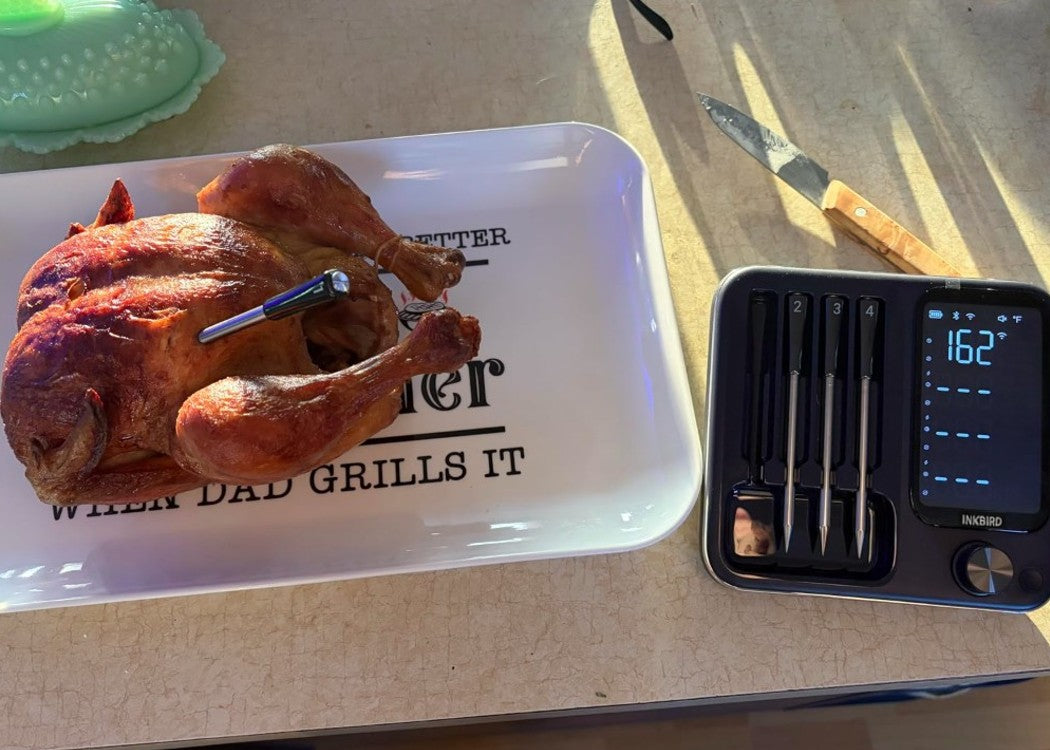
I’ve been using the INKBIRD INT-14-BW for about a year now. It’s been my go-to for everything from backyard grilling to holiday roasts. I loved that thing. Four probes, a charging case with a screen, and solid wireless connection.
So when INKBIRD announced the new INT-14S-BW, I had two thoughts. First: “Do I really need to upgrade?” Second: “Okay, fine, I’m curious.”
Turns out, curiosity was the right move. I’ve spent the last few weeks cooking with the new model, and I’ve got some thoughts I want to share - not just as a review, but as someone who’s been using the older version back‑to‑back. If you’re looking at either of them, hopefully this helps you decide.
INKBIRD INT-14S-BW Overview
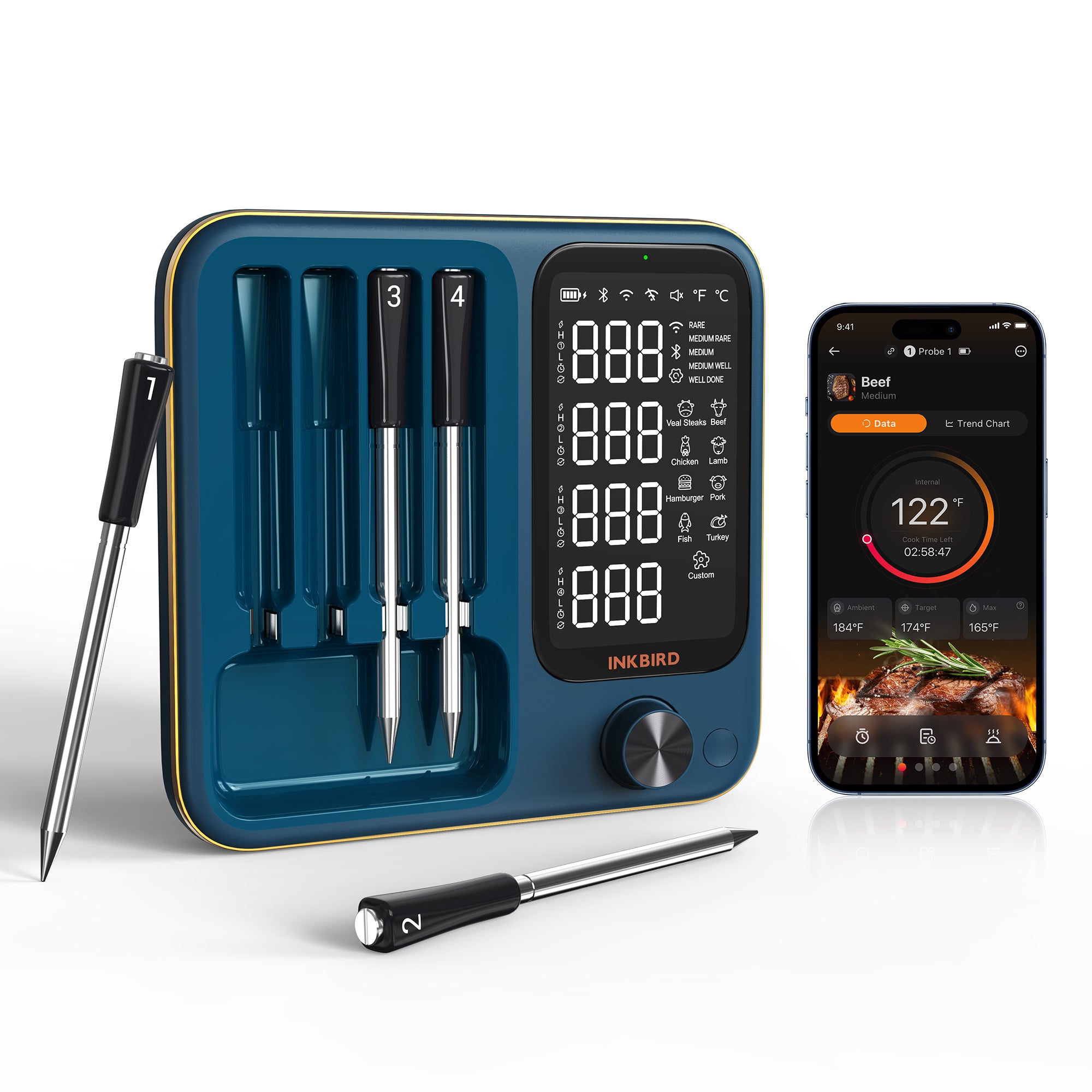
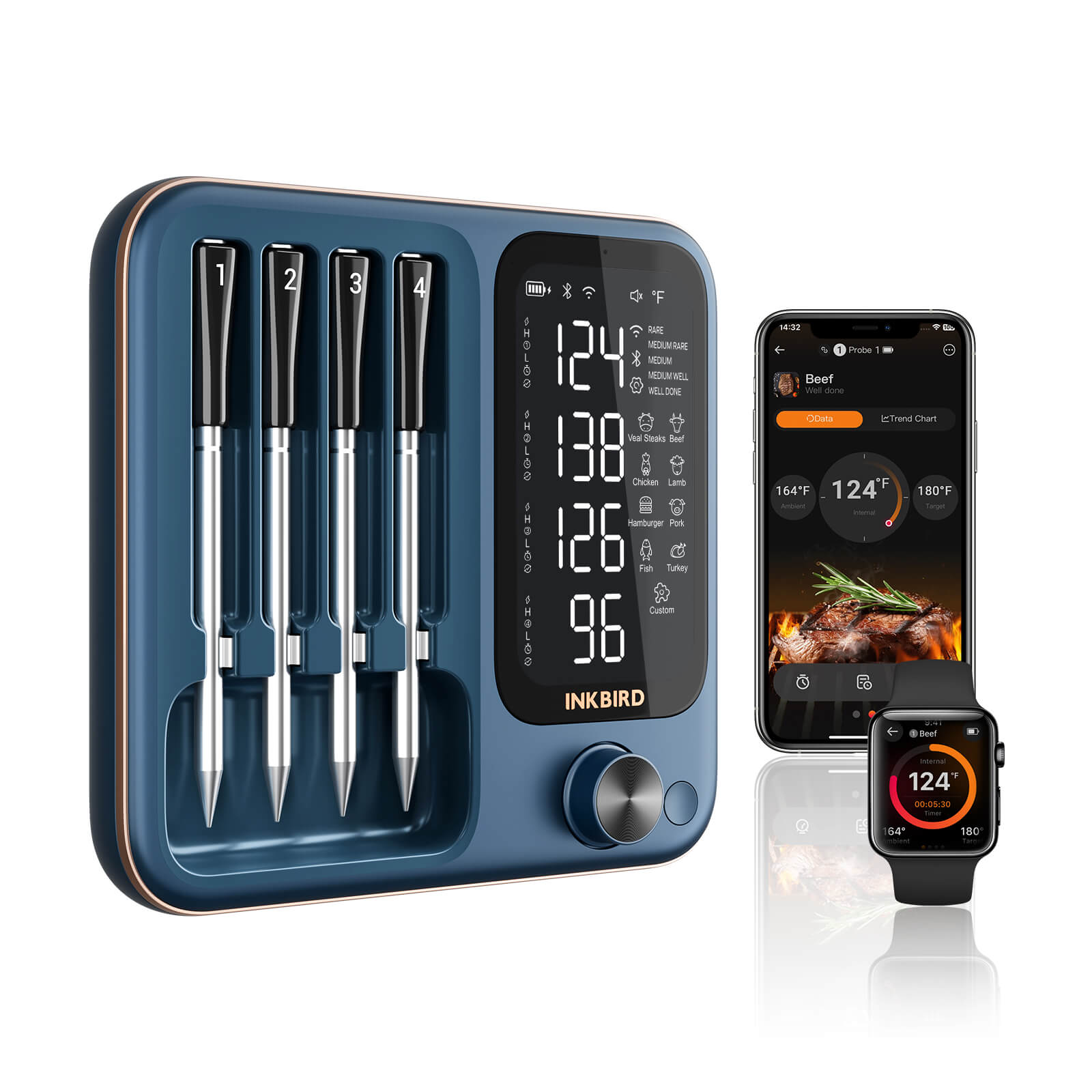
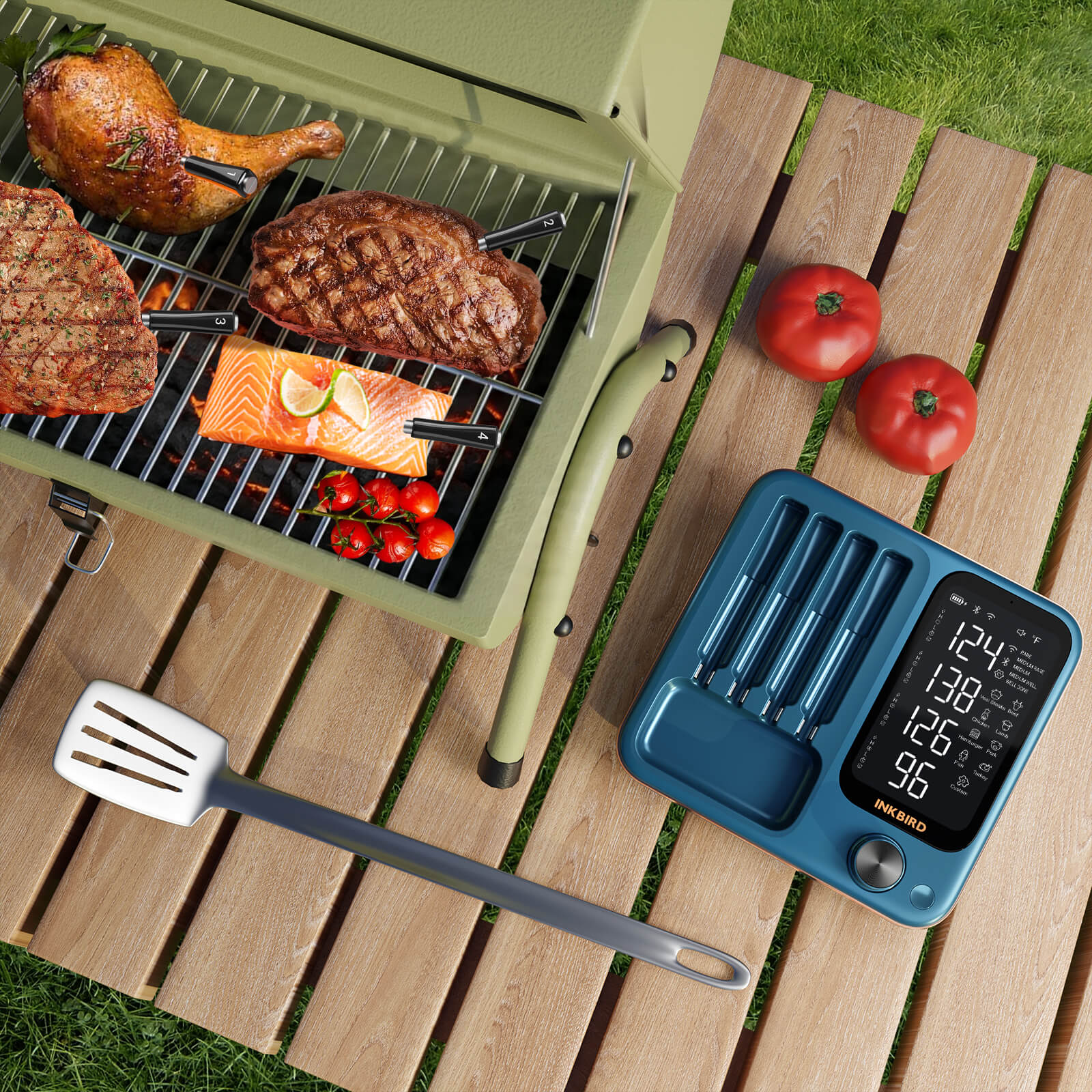
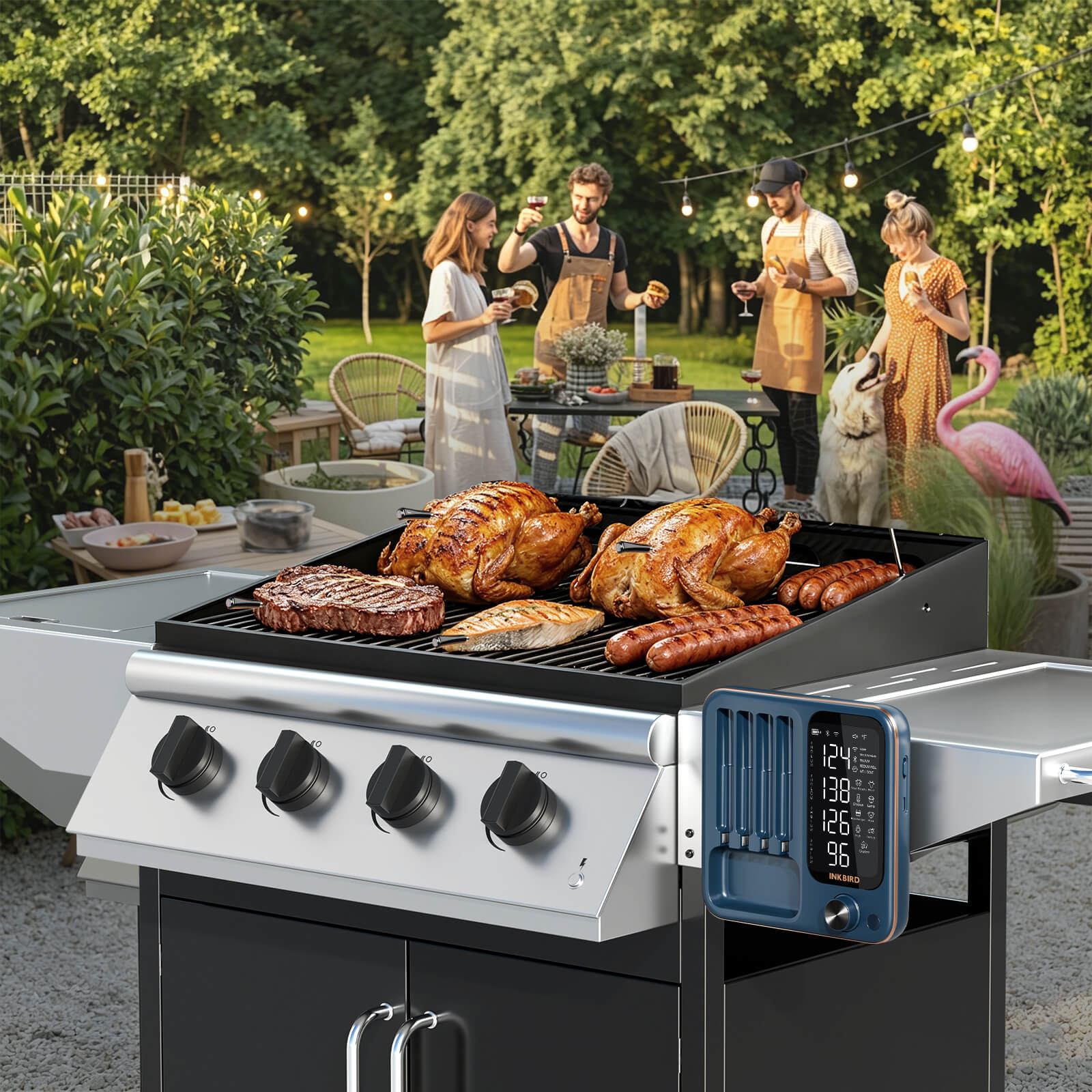
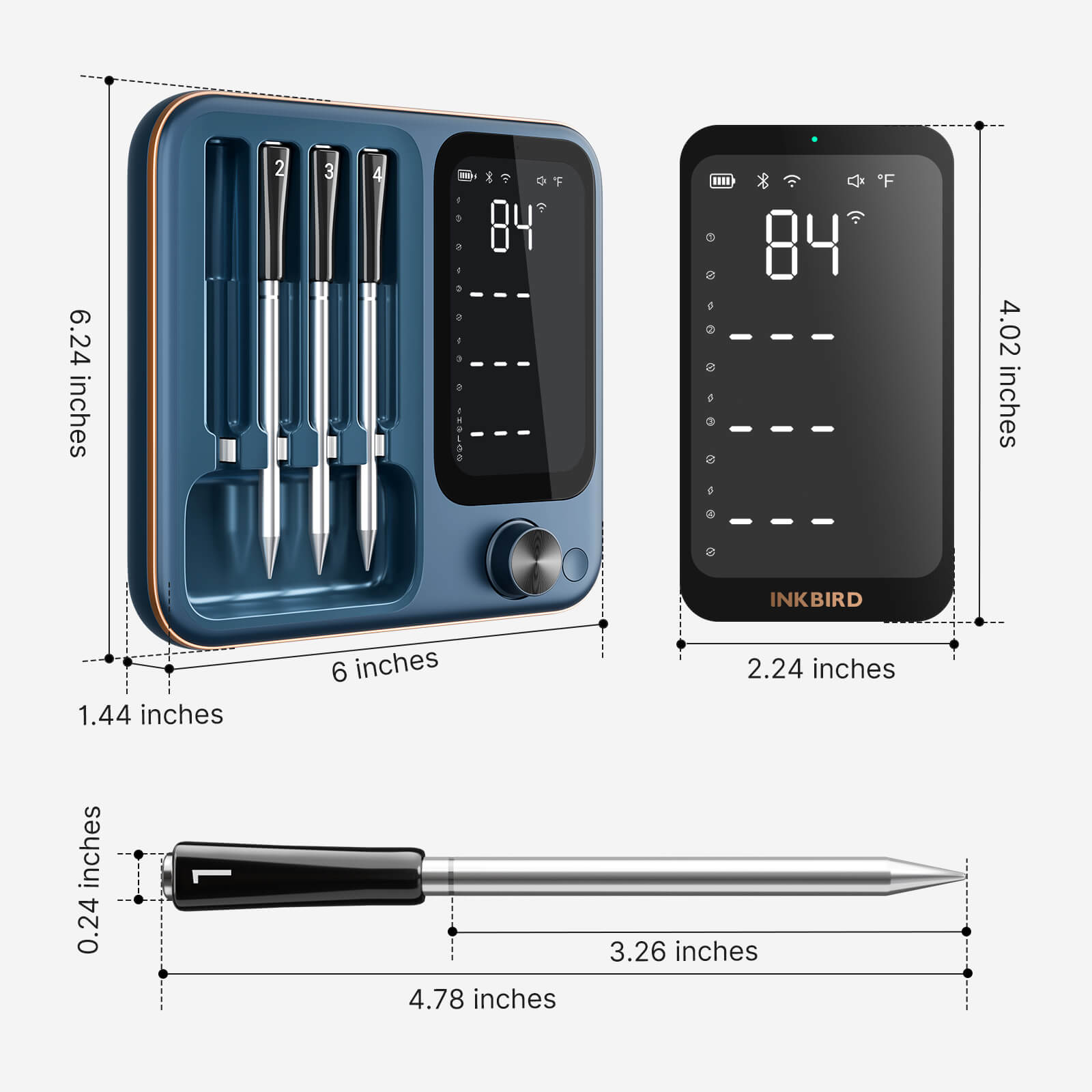
When I opened the box, I almost laughed. The charging base looks exactly the same as my INT-14-BW. Same big screen, same knob on the side, same four probes nestled in their slots. The only difference is the color. If you put them side by side, you’d have to squint to tell them apart.
But the moment I picked up a probe, I noticed the weight felt slightly different. Not heavier, just… solid. I figured that was because of what’s inside. More on that in a minute.
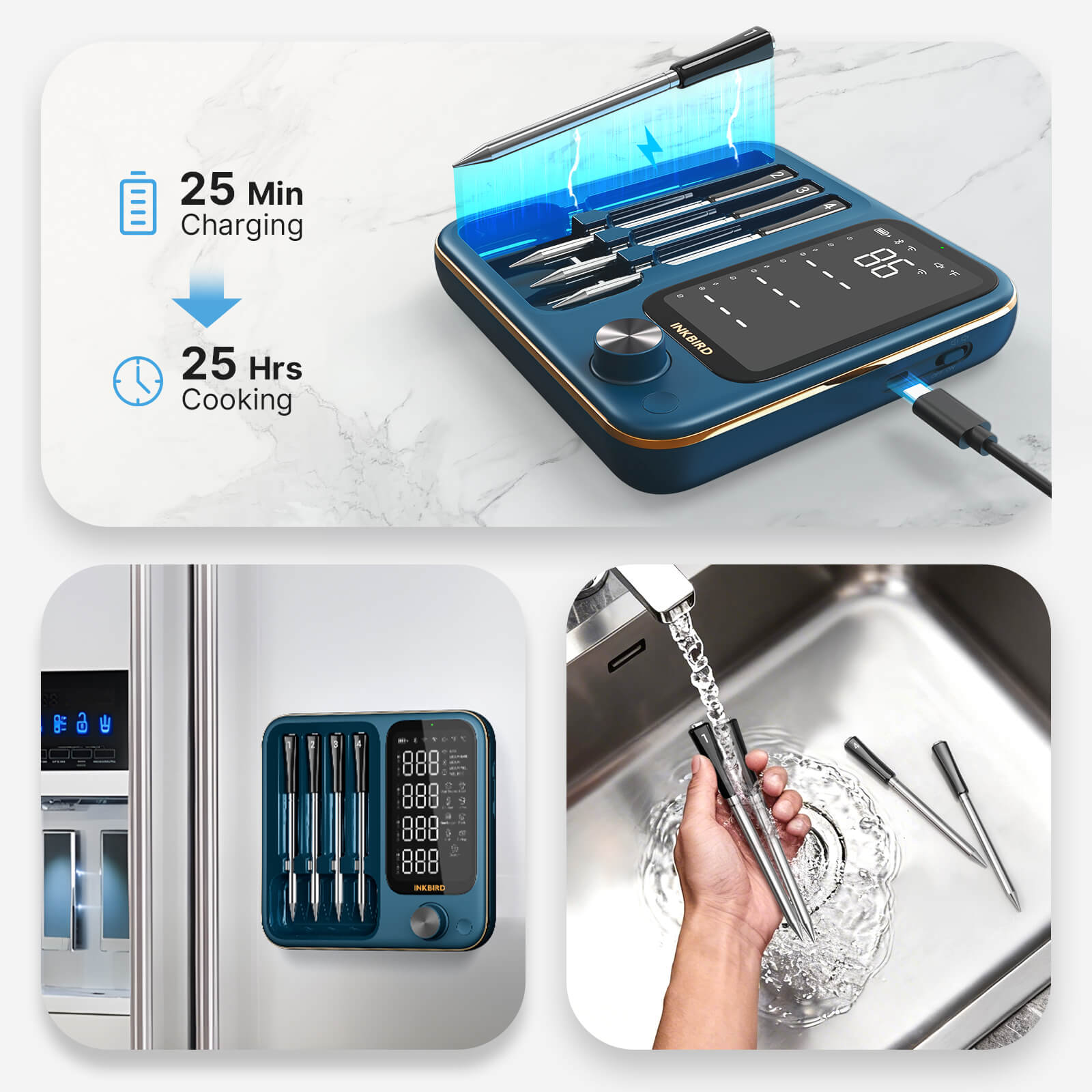
The probes are still IP67 waterproof (yes, dishwasher safe - I tested it, no issues), and the ceramic handle still shrugs off heat like it’s nothing. I’ve used them in a grill running at 450°F and they came out looking brand new.
|
What I Like |
What I Don’t Like |
|
|

The Probes
This is the headline feature, and it’s where the INT-14S-BW truly separates itself from its predecessor.
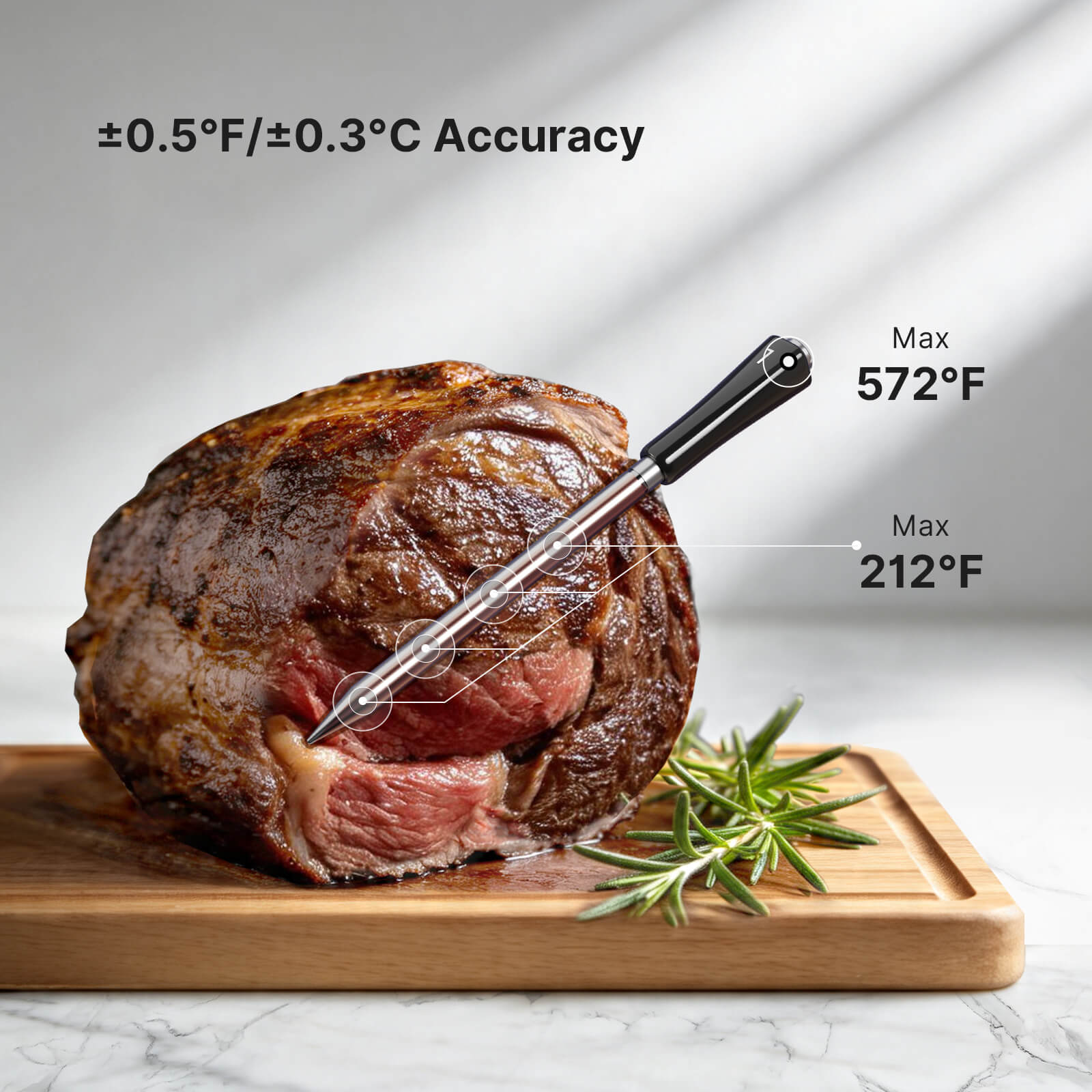
The original INT-14-BW has one food sensor at the tip and one ambient sensor near the handle. That’s the standard setup for most wireless thermometers, and it works fine. But the new INT-14S-BW packs four food sensors along the length of each probe, plus the ambient sensor.
At first I thought, “Do I really need that many sensors?” Then I did a smoked brisket. With four sensors, the app showed me the temperature gradient across the whole flat. One end was reading 198°F while another part was still at 187°F. I was able to reposition the probe slightly and even rotate the brisket on the smoker to even things out. When it finally came off, that brisket was the most consistently tender I’ve ever made. For big cuts, uneven roasts, or even a thick pork shoulder, those extra sensors genuinely help.

Accuracy and NIST Certification
The old INT-14-BW is rated at ±1.8°F. In real life, I never had a problem with it. A degree or two off isn’t going to ruin a steak. But the new model claims ±0.5°F and comes with NIST-traceable certification. I didn’t know how much I’d care until I did a reverse sear on some ribeyes. I set the target at 120°F before searing, and when my instant-read thermometer hit 120°F, the INT-14S-BW was reading 120°F as well. Not 119. Not 121. Spot on.
I tested it in an ice bath and boiling water too - both times it was within half a degree. For someone who likes precise results, especially with expensive cuts, that extra accuracy gives me real peace of mind.
The response time is still claimed to be 1 second, and in practice, the temperature updates on the base and app are almost instantaneous. There’s no lag that makes you second‑guess the reading.

Connectivity
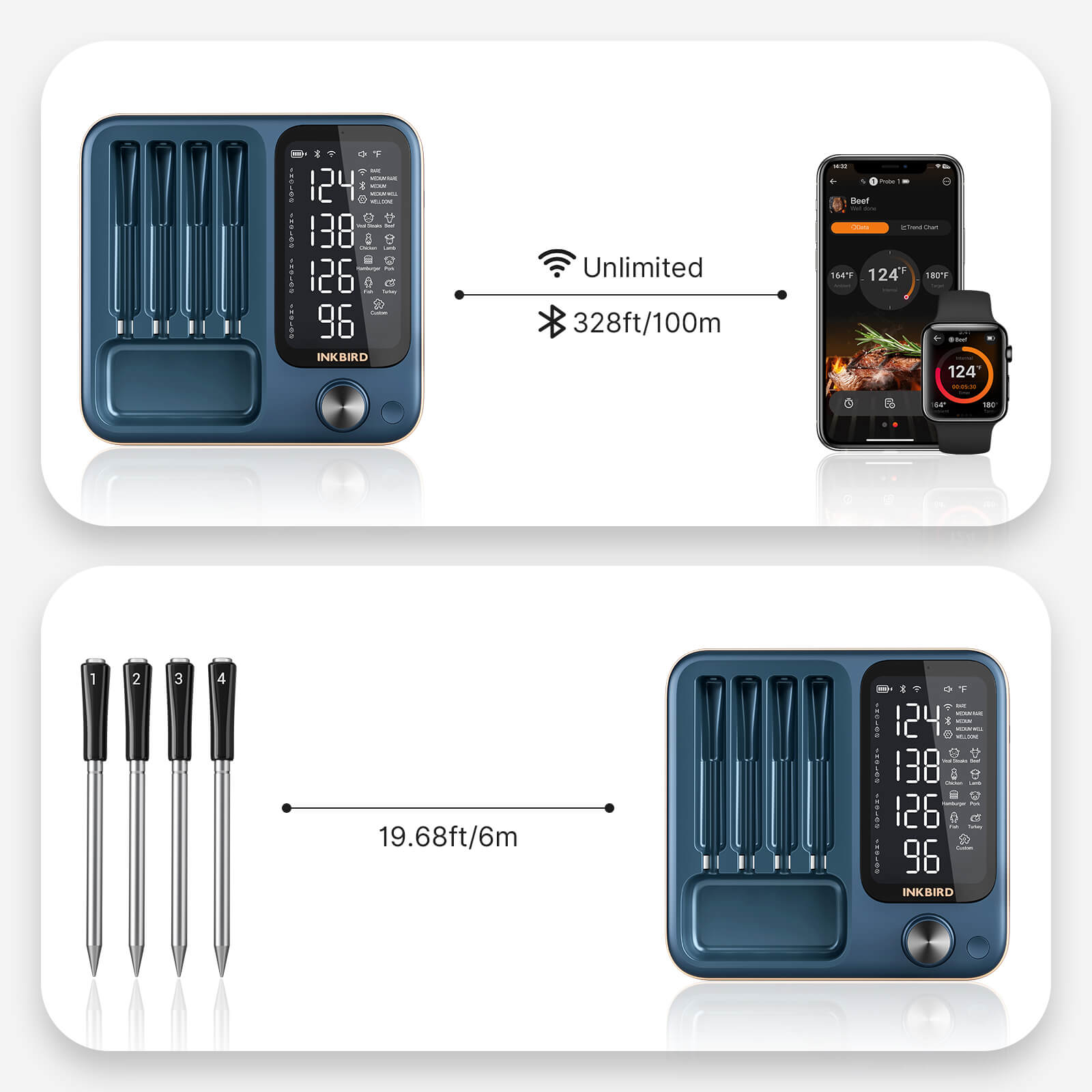
Well, this is nerdy. The new INT-14S-BW supports 5GHz WiFi, and it’s noticeably snappier. In practice, the app updates feel instantaneous. Bluetooth range got a small bump too - from 300ft to 328ft. Not a huge difference, but I did notice I could walk a little farther into my house before the handoff to WiFi kicked in.
One thing I really appreciate: if the connection drops, it stores up to 30 minutes of offline data. I tested it by turning off my phone and walking around the block, and when I came back, all the temperature history was right there.

The App
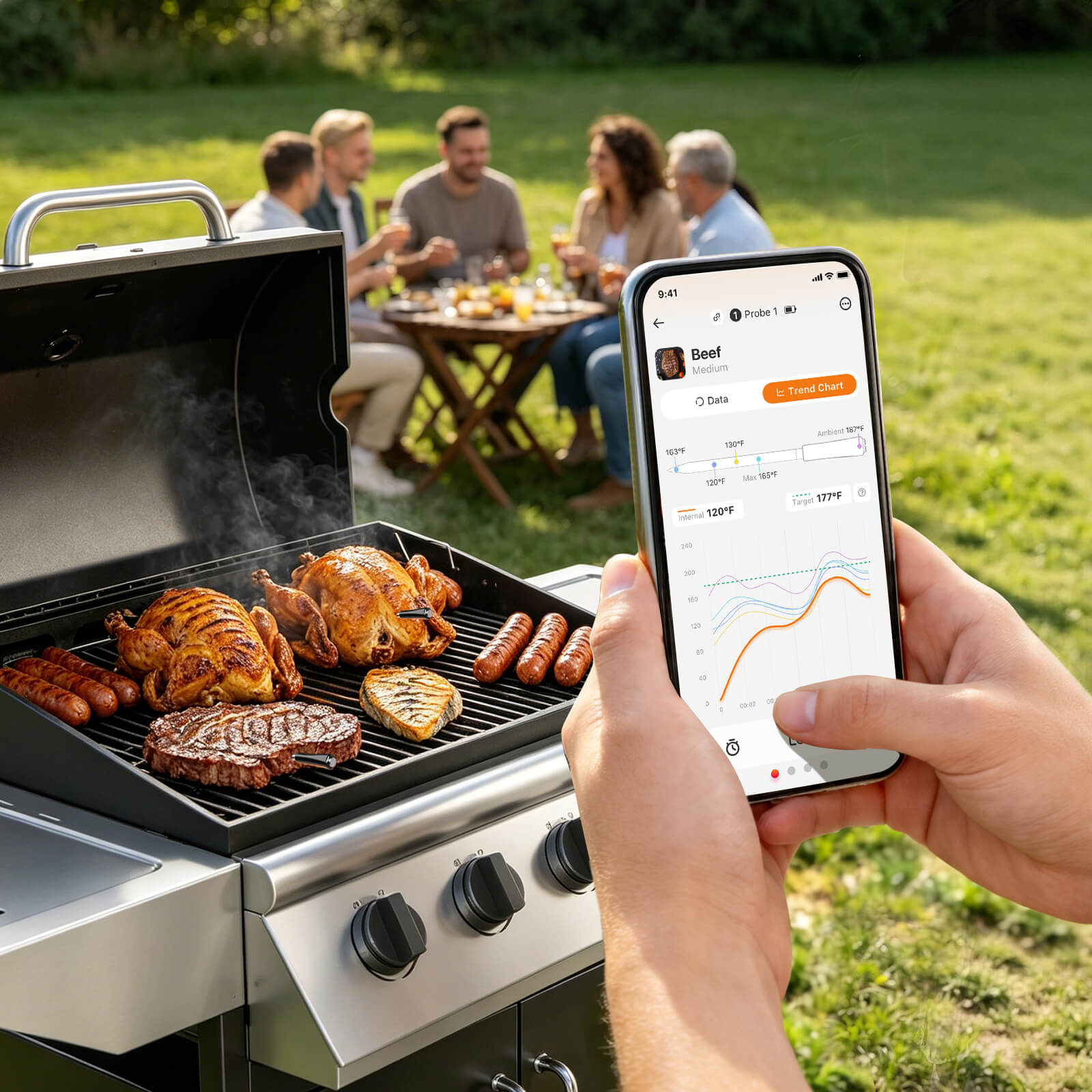
I’ve always liked the INKBIRD app. It’s simple, has a ton of USDA presets, and works with my Apple Watch so I can glance at temps without pulling out my phone. But the INT-14S-BW adds a few features that have quickly become favorites.
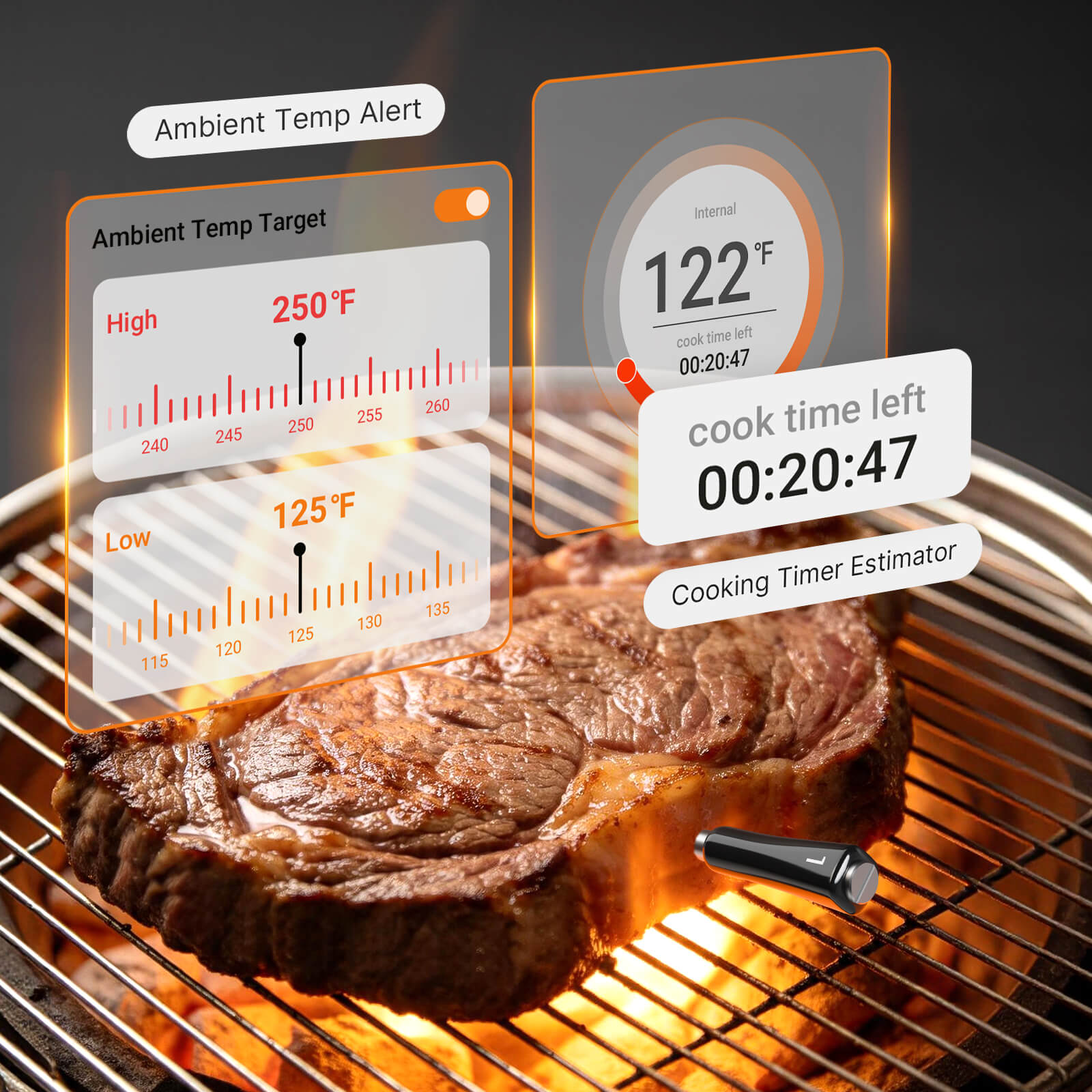
Cooking time estimator. This one surprised me. Based on how fast the temperature is rising, the app gives you an estimate of how long until your food is done. On that brisket I mentioned, it predicted 11 hours and 45 minutes. The brisket finished in 12 hours. That’s close enough to plan my sides and actually know when to start them.
Ambient high/low alerts. My charcoal smoker is a fickle beast. I set a range of 225–275°F in the app, and it actually alerted me twice when the temperature dipped below 225. If you use a kamado or an offset, you’ll love this.
OTA firmware updates. This is more of a future‑proof thing. The fact that INKBIRD can push updates over the air means the thermometer can get better over time.

Battery Life and Charging
Both the old and new models claim 25 hours of probe battery life from a 25‑minute charge. I haven’t run a probe down to zero yet, but I did a 14‑hour pork shoulder, and the probes still had about 30% left. For my typical grilling sessions, I never worry about running out of power.
The base charges via USB‑C and holds enough juice to top off the probes multiple times. I usually charge the base every couple of weeks, and that’s with 3-4 cooks in between. They say not to use fast chargers on the base, so I stick with a standard 5V adapter. Takes about 3.5 hours for a full base charge, but it’s not something I think about often.

Who Should Buy the INT-14S-BW?
If you’re new to wireless thermometers and you want the one that’ll last you years without feeling outdated, this is it. It’s got all the modern features, the accuracy, and the flexibility to handle anything from a weeknight chicken to an overnight brisket.
If you’re coming from a wired thermometer or one of those cheap single-probe units, you’ll be blown away. No cords, no running back and forth to check temps, no overcooking. Just set it, watch it on your phone, and get alerts when it’s time to act.
Should You Upgrade from the INT-14-BW?
This is the question I kept asking myself. If you already own the INT-14-BW and you’re happy with it, you don’t need to upgrade. That’s the honest truth. The old one is still a fantastic thermometer, and it’ll keep doing what it does.
But if you’re like me - someone who cooks large cuts, pays attention to the details, and gets a little nerdy about temperature - the INT-14S-BW is a meaningful step up. Here’s what you’re really getting:
- Four food sensors per probe instead of one. That’s the biggest practical difference. For big roasts, briskets, or even a whole turkey, you’ll get a much fuller picture of what’s happening inside.
- Lab-grade accuracy with NIST certification. Not everyone needs ±0.5°F, but if you just hate guessing, it’s a real confidence booster.
- 5GHz WiFi for a snappier connection, plus a little extra Bluetooth range.
- New app features like the cooking time estimator and ambient alerts. I didn’t think I’d use them, now I don’t want to cook without them.
- OTA updates so the device stays current.
If those things matter to you, the upgrade is worth it. If you mostly cook burgers, steaks, or smaller cuts where one sensor is plenty, the INT-14-BW is still a great choice and usually comes in at a lower price.
RELATED: INKBIRD INT-14-BW Review
A Few Things I’d Still Change
No product is perfect, and I’ve got a couple minor gripes.
The base still doesn’t have a lid. The magnets hold the probes in place really well - I’ve never had one fall out - but I’d still feel better with a cover for storage.
The wireless range between the base and the probes is still only 20 feet. That’s fine for most kitchens and patios, but if your grill is far from where you keep the base, you might hit that limit. Of course, Bluetooth and WiFi take over for longer distances, so it’s not a dealbreaker.
Also, the base only has 8 recipes stored locally, while the app has 26. I almost always use the app anyway, so it doesn’t bother me much.
Final Thoughts
The INKBIRD INT-14S-BW takes everything that worked about the INT-14-BW and adds the stuff that serious cooks actually ask for: more sensors, better accuracy, faster WiFi, and smarter software.
I’ve been using it for weeks now, and I’ve already packed away my old thermometer. Not because the old one was bad, but because the new one just makes cooking easier and more precise in ways I didn’t know I wanted.
If you’re on the fence, I’d say go for it. And if you’re an INT-14-BW owner wondering if it’s worth the jump, ask yourself how often you cook large cuts and how much you care about exact temperatures. If the answer is “often” and “a lot,” you’ll love the upgrade. For me, it has quickly become the new centerpiece of my cooking workflow, and I suspect it will be for years to come.


Compartir: