


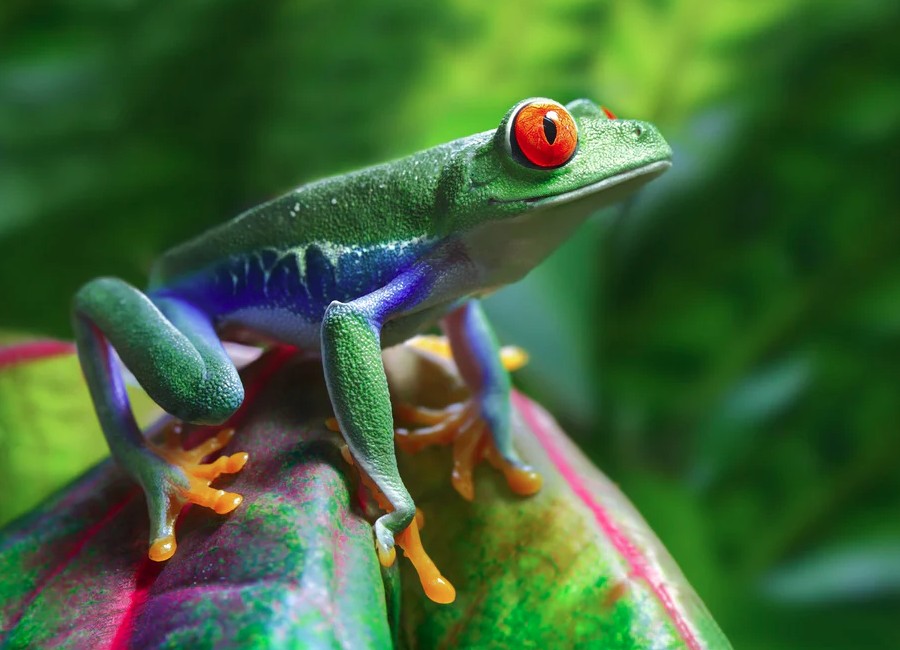
Deep in the lush tropical rainforests of South America lives the red-eyed tree frog, an amphibian with emerald green skin, blue legs and flanks, orange toes, and ruby-red eyes. It looks like something only straight out of a cartoon, but it’s very much real. What’s more, its docile nature makes it a perfect pet. If you’re considering bringing one into your home, this red-eyed tree frog care guide contains everything you need to know, including habitat and diet, to help your new friend thrive and stay happy.
Related Readings:
What Is the Red-Eyed Tree Frog?
The red-eyed tree frog, scientifically known as Agalychnis callidryas, is a small, arboreal frog native to the tropical jungles and rainforests of Mexico, Central America, and Colombia. Like any other reptile, red-eyed tree frogs are cold-blooded and rely on external heat sources to regulate their body temperature. And since they are nocturnal, these creatures only become active at night.
True to its name, the red-eyed tree frog is strictly arboreal, which means they spend their entire lives in trees and rarely descend to the forest floor. Another fun fact about red-eyed tree frogs is that during the day, they will protect themselves from predators by closing their eyes and tucking in their legs. When they feel threatened, they will snap open their famous, distinctive red eyes to startling predators.

Red-Eyed Tree Frog Lifespan & Size
The red-eyed tree frog is a small species of tree frog, with females generally being a bit larger than males. Adult males are 2-2.5 inches long, while females are 3-3.5 inches long, from snout to vent. With proper care, a red-eyed tree frog can live a good long while, up to 8-12 years, depending on the species. However, their lifespan can be significantly shorter in the wild, which is why proper care is essential for their longevity.
Red-Eyed Tree Frog Care Guide
As mentioned earlier, taking good care of your red-eyed tree frog pet can extend its lifespan to the maximum. Even if you already have one at home, it’s still a good idea to revisit the following care tips to make sure you’re doing everything right.
Habitat Size
Red-eyed tree frogs are typical arboreal creatures and love to climb, so height is far more important than floor space. An adult frog needs at least a 15-gallon tank, and if you plan to house a pair or even more, this should be larger. I recommend an 18x18x24-inch vertical terrarium. It should also have a securely fitting screen top to prevent them from escaping while ensuring good ventilation.

Temperature & Humidity
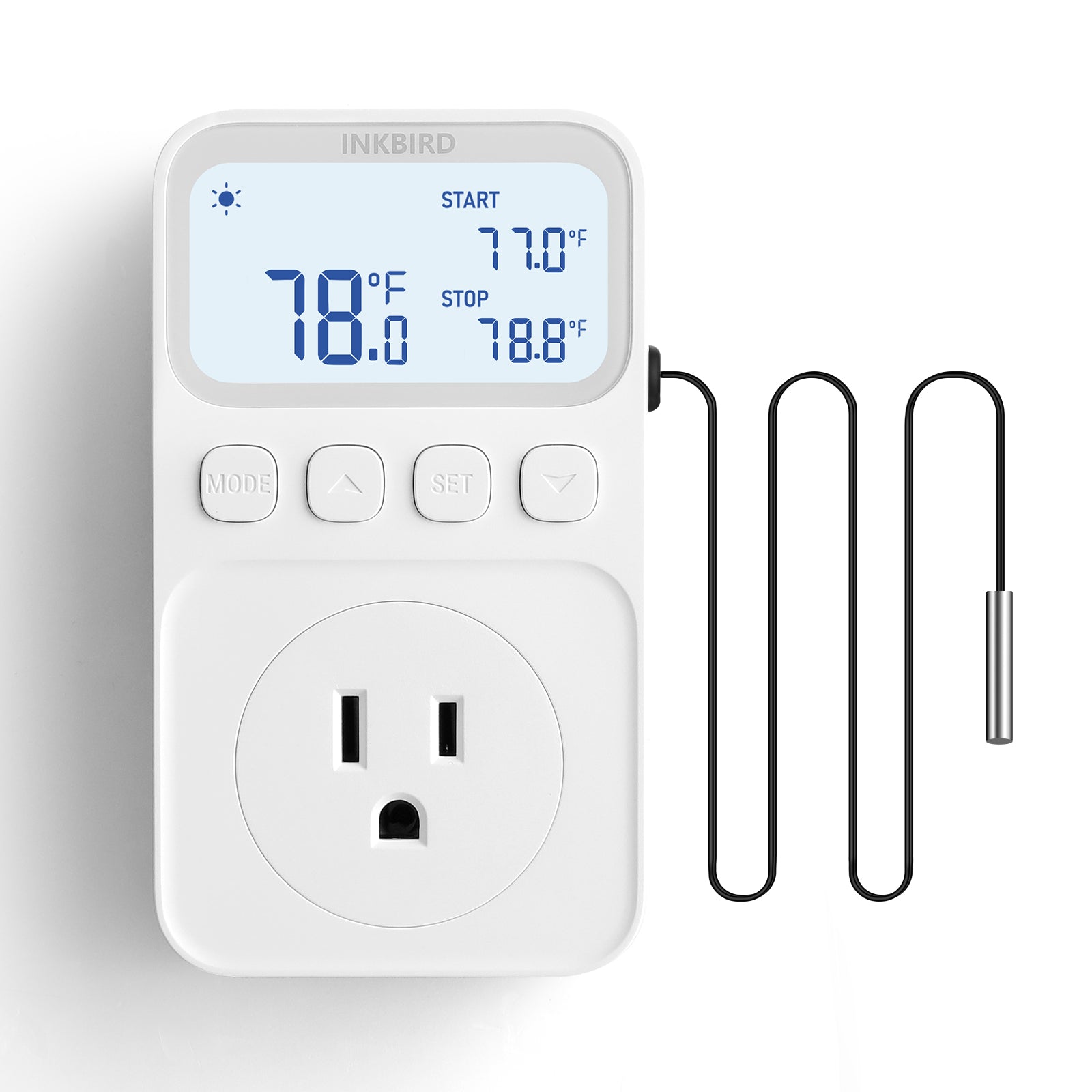
Red-eyed tree frogs are native to tropical rainforests, so they prefer a warm, humid environment. During the day, the temperature should be maintained at 75-80°F (24-27°C), while at night, it should slightly drop to 70-75°F (21-24°C). You can use a heater mounted on the side or a heating pad or tape placed on the bottom, but avoid using basking lamps. Regardless of the heating method you use, a thermostat should be used to maintain the ideal temperature, and I would recommend the INKBIRD ITC-308 Temperature Controller for convenient remote controlling via your phone.
As for humidity, red-eyed tree frogs need levels between 70% and 90% to breathe effectively through their skin. This can be achieved by misting the enclosure once or twice a day with dechlorinated or reverse osmosis water. Adding a moist substrate or using a large mister can also help keep humidity high. To monitor the humidity accurately, consider using a thermo-hygrometer or connecting the mister to a humidity controller.

Lighting
Red-eyed tree frogs don’t have high light requirements, but they still need a low-intensity UVB bulb, either 2.0 or 5.0, to synthesize vitamin D in their skin, which helps them absorb dietary calcium.
Place the bulb high above their perch and provide at least one hiding spot for the frog to escape the light.
Additionally, the light shouldn’t be on all day. Only 10-12 hours of light per day is sufficient. Don’t forget to replace the bulb every six months, even if it’s still producing light, as its UVB output diminishes over time.
Substrate & Decor
Paper towels are cheap and easy-to-clean substrates, but they need to be replaced every day and are unsightly. I prefer a mulch-type substrate that retains moisture well, like coconut fiber, peat moss, or a reptile-specific terrarium soil mix. Avoid gravel, small bark pieces, or pebbles, as these can be easily ingested. Also, avoid reptile carpet or artificial turf, as they can be too abrasive for the frog’s delicate skin.
As their name implies, red-eyed tree frogs spend most of their time in trees and climbing. So, to create a suitable habitat for them, consider using natural climbing elements like driftwood, cork bark, and robust artificial vines. Moreover, plants such as pothos, bromeliads, and snake plants are also good options. Not only are they aesthetically pleasing, but they also help retain moisture and provide hiding spots.
In addition, a red-eyed tree frog's habitat needs at least two hiding areas - one on the warmer side and another on the cooler side. To help your pet feel safe and reduce stress, simulate a natural environment on the outside of the back wall with dark green paper or cork bark boards.

Cleanup & Maintenance
Every day, you should take some time to clean out any uneaten insects and feces, as well as to clean the food and water bowls. If you can, take a moment to ensure that all your equipment is functioning properly.
A monthly deep cleaning is necessary, which means you need to remove your frog to a temporary container with paper towels and a hiding place. Then, scrub the tank and all accessories with reptile/amphibian habitat cleaner or a 3% bleach solution, and rinse thoroughly with hot water to ensure no residue remains. After drying the tank and its furnishings completely, replace the fresh substrate and return your frog to its home.

Handling
Red-eyed tree frogs don’t like being handled. Their skin is delicate and porous, and oils, sweat, bacteria, and chemicals from our hands can be harmful to them. Plus, handling them can also cause them stress. The only time you should handle them is when it's absolutely necessary, like during a tank cleaning, and even then, make sure your hands are clean and wet.
Shedding
Red-eyed tree frogs shed their skin regularly, which is completely normal. Some may shed daily, while others shed every few weeks. Before shedding, you might notice them looking a bit dull or opaque. Interestingly, they will eat their dead skin, as it's a natural way for them to reabsorb nutrients, and it helps prevent predators from tracking them through the skin. During this time, ensure the humidity levels are adequate to help them shed more easily.

Health Care
Even if your frog appears healthy, it should receive annual veterinary checkups. But if you notice:
- Weight loss
- Decreased appetite
- Lethargy
- Inability to jump easily
- Sluggish reactions
- Weak voice
- Swelling of the abdomen or other body parts
- Skin abrasions
- Lesions or reddening
- Dry skin
- Eye discharge or swelling
- Sunken eye sockets
- Nasal discharge
- Difficulty defecating
- Cloacal prolapse
Don’t wait to get help immediately.

Tank Mates
Red-eyed tree frogs are solitary creatures, so they don’t feel loneliness. It’s best not to house male frogs together, as they often fight due to aggressive and territorial tendencies. However, a male can be kept with one or more females of the same species, though this might result in reproductive issues. Furthermore, avoid mixing different species of amphibians.
What Do Red-Eyed Tree Frogs Eat?
Red-eyed tree frogs are insectivorous and typically feed on live insects such as earthworms, crickets, cockroaches, hornworms, and silkworms. Prey items should be no larger than the width of the frog's head. Maintaining a diverse diet of insects is crucial to keeping your frog happy and healthy.
You can place food on a plate or on a flat rock. For frogs under 3 inches, feed them daily or every other day, while those over 3 inches should be fed every 2-3 days.
Sprinkle calcium supplements on the food for juvenile frogs daily, and for adults 2-3 times a week. Regardless of size or age, multivitamin supplements should be provided weekly.
At the very bottom, you should also place a water bowl with shallow water, just enough for the frog to soak without risking drowning, as they are very poor swimmers.

FAQs
How long does the red-eyed tree frog live?
With proper care, a red-eyed tree frog lives about 8-12 years in captivity, sometimes even longer.
Is the red-eyed tree frog poisonous?
No, they are not seriously poisonous to humans. While they have mild skin secretions that can be irritating to their natural predators, they pose no real danger to people.
Is the red-eyed tree frog a good pet?
They can be, but they are not for everyone. They require a very specific, humid rainforest environment and are delicate, making them better suited for intermediate keepers rather than beginners.
Where can I buy a red-eyed tree frog?
Red-eyed tree frogs are not commonly found in regular reptile stores, so you may need to call a specialty exotic pet store for more details. It’s advisable not to catch or buy wild frogs, as they are easily stressed and may carry parasites.













Share: