


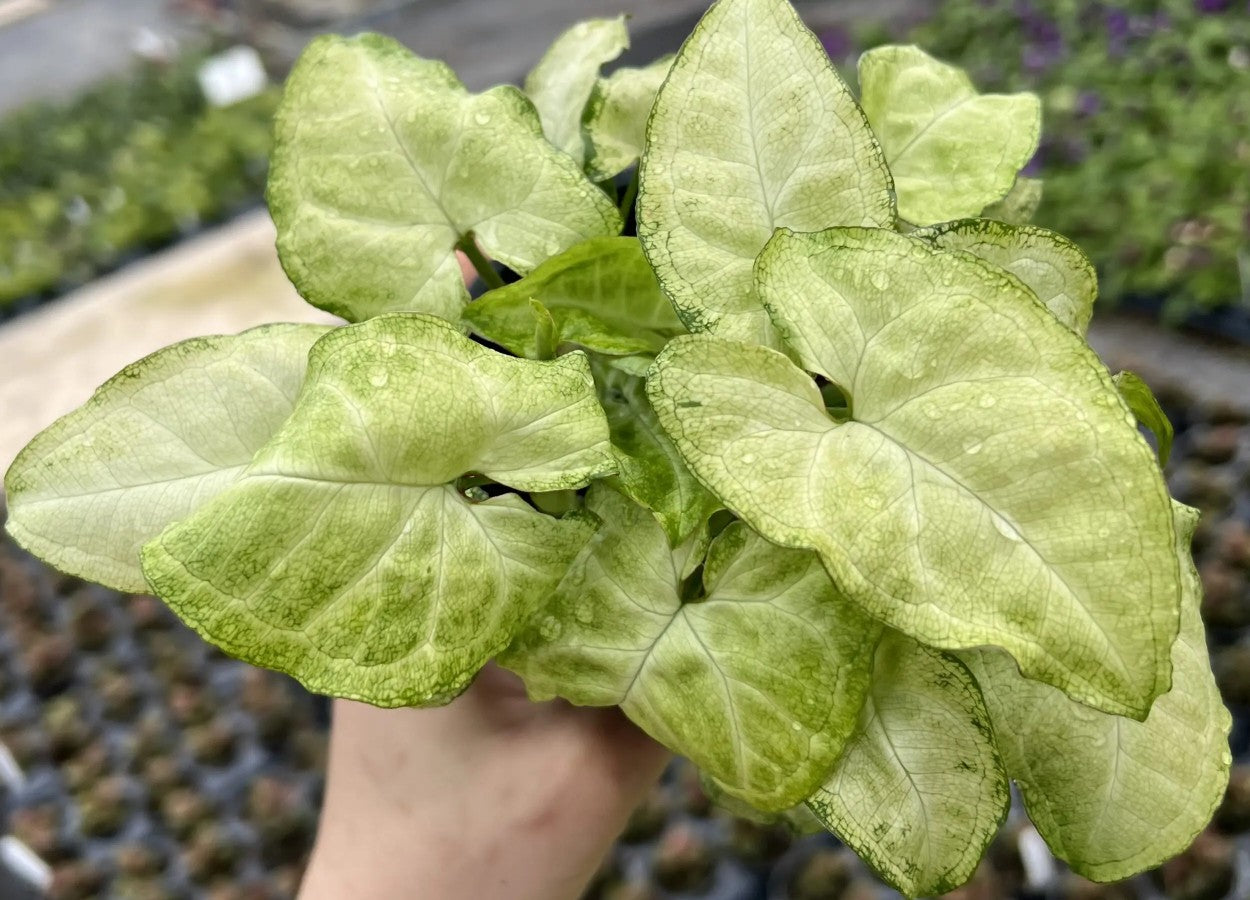
I got my first syngonium because I liked the leaves - arrow-shaped, covered in beautiful patterns like reptile scales. My three pots have been thriving for four years now, and I think it's time to share some care tips on growing syngonium.
If you've never kept a syngonium podophyllum (or arrowhead plant, as most people call it), you're in for a treat. They're easy to care for, they grow fast, and they come in so many colors that you'll probably end up with a shelf full of them. But like any plant, they have a few non-negotiable needs. Let's check them out.
About Syngonium (Arrowhead Plant)
Syngonium is native to the tropical rainforests of Mexico, Central America, and South America. In the wild, it climbs up trees. Indoors, it does the same thing - if you give it a moss pole, those stems will grab on and reach upwards. Without a pole, it trails down like a hanging plant.
The scientific name is Syngonium podophyllum, but nobody says that at a plant swap. You’ll hear Arrowhead plant, goosefoot, or even nephthytis.
One cool thing: young leaves are perfect little arrows. As the plant matures, the leaves split into lobes. Give it something to climb, and you’ll see that change happen faster.

Syngonium Varieties
I’ll keep this short because you can go down a rabbit hole. But here are the ones people actually look for:
- Syngonium White Butterfly - pale green with white veins, almost silvery. Very forgiving.
- Syngonium Albo - big splashes of white on green. Each leaf is a surprise.
- Pink Syngonium (Neon Robusta) - bright pink leaves that fade to green if you don’t give enough light.
- Syngonium Milk Confetti - creamy white with tiny pink speckles. Looks like someone sprinkled it with confetti.
- Syngonium Mojito - dark green with irregular light green splashes. Like a mint mojito in leaf form.
There are dozens more, but these five cover most of what you’ll find at nurseries or online.
Syngonium Care Guide
The good news is that syngonium isn’t high-maintainance. The downside, however, is that it has a subtle way of expressing its displeasure. If you notice yellowing leaves, elongated stems, or crispy tips, that’s its way of signaling that something isn’t quite right.
Light
Like most tropical plants, syngonium likes bright, indirect light. A north or east window works great, but a west window works too if you pull the plant back a few feet.
Insufficient light can cause the leaves to get smaller, the space between nodes to get longer, and variegated varieties to turn mostly green. Conversely, too much direct sun can lead the leaves to bleach or get brown patches within a day or two.
If you only have a dim room, go for a solid green variety. They tolerate low light much better than the fancy pink or white ones.

Watering
Syngonium likes moist but doesn’t like too wet. Stick your finger into the soil up to the second knuckle. If it feels dry, water. If it still feels damp, hold off. Typically, you’ll need to water about once a week in summer, and once every 10-14 days in winter.
When you water, do it thoroughly until water runs out the drainage hold. Then dump the saucer. Don’t let the plant sit in water. Also, use room-temperature water to keep the roots happy, as cold water can shock them.
Lower leaves turning yellow or feeling soft is the sign of overwatering, while leaves going limp or not perking up after a day or two is the sign of underwatering.
Temperature & Humidity
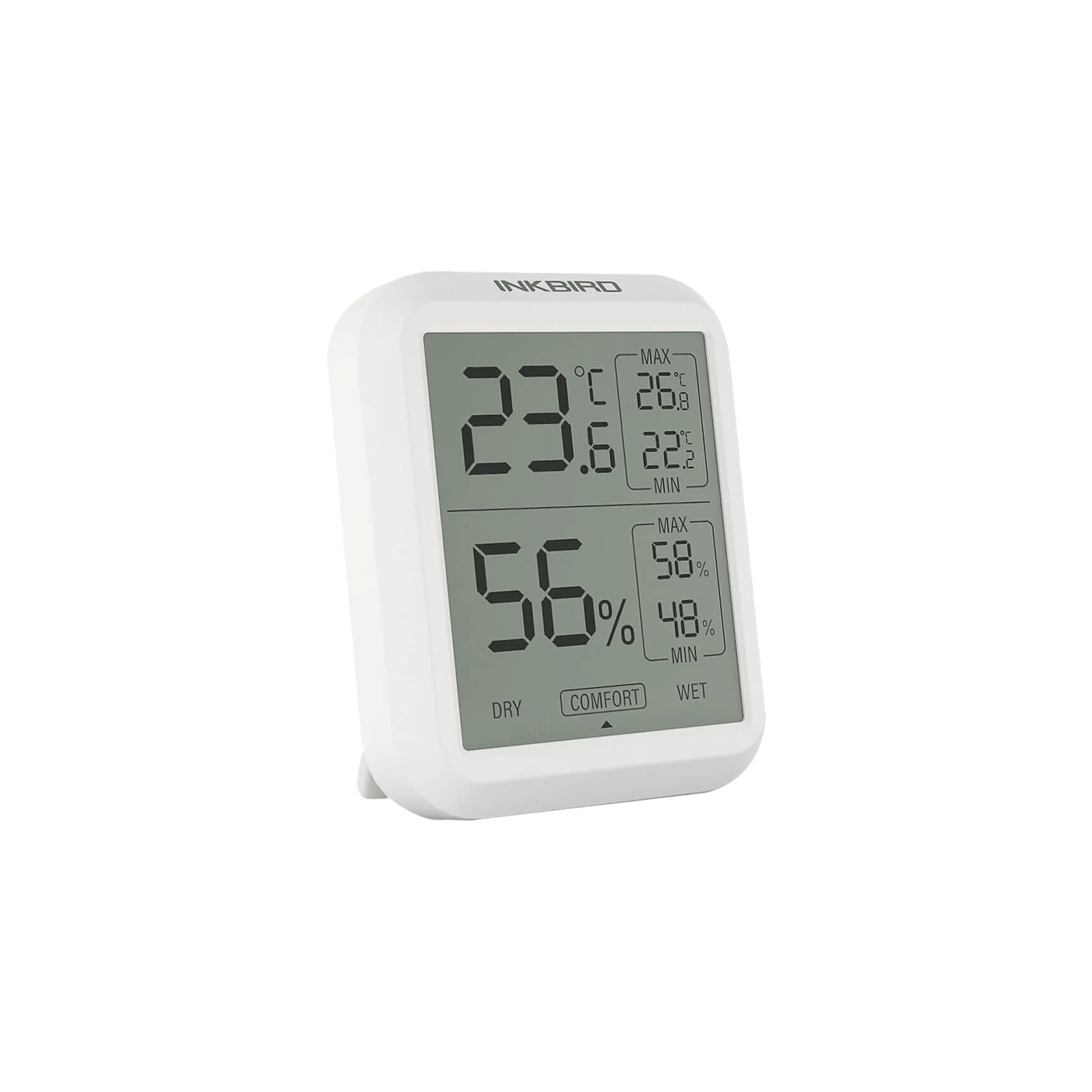
Native to tropical rainforests, syngonium thrives in warm, humid environments - ideally between 64–79°F (18–26°C) with 50-70% humidity. Generally, if your home feels cozy to you, it should be equally comfortable for your plant. However, you should keep it away from drafts and direct airflow from windows or air conditioning.
The lowest temperature syngonium can tolerant around 55°F (13°C). If exposed to this temperature for a long time, its growth will stagnate, and the plant may eventually wither. Additionally, if humidity drops below 40%, especially when heating systems are in use, the leaf tips will start to brown and crisp.
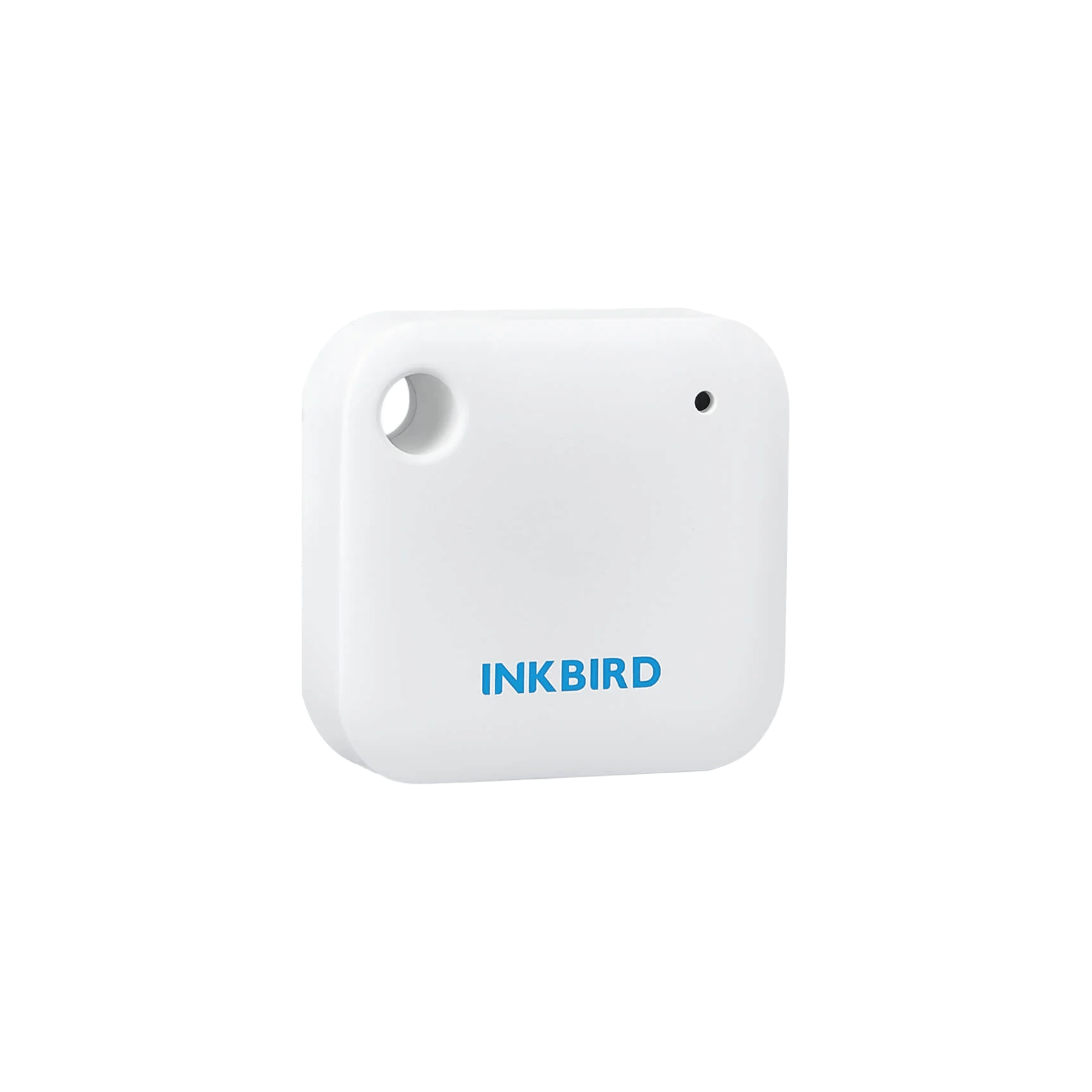
To monitor these conditions effectively, consider using a Bluetooth thermo-hygrometer near your plant, so you can take immediate action whenever the temperature or humidity falls outside the ideal threshold.

Soil
Use a mix that drains well. Regular potting soil by itself stays wet too long.
My lazy but effective mix: 2 parts regular potting soil, 1 part perlite, 1 part orchid bark. That’s it. The bark creates air pockets, the perlite helps drainage. If you don’t have bark, use extra perlite.
Avoid heavy “moisture control” soils. Those are usually a trap for syngonium.
Fertilizer
Feed during spring and summer only. Every 3-4 weeks is plenty. Use a balanced liquid fertilizer (like 10-10-10 or 20-20-20) diluted to half strength. Or use a general houseplant fertilizer at the recommended dose. Don’t fertilize in winter - the plant isn’t growing much anyway, and extra fertilizer can burn the roots.
One more thing: if you notice the lower leaves turning yellow but the plant is otherwise healthy, that’s often old age, not a fertilizer problem. Don’t panic-feed.

Pruning
Pruning keeps syngonium full and bushy. Otherwise, it’ll send out one long, thin vine and look sad. Cut just above a leaf node, and new growth will branch out from that node. You can cut back quite hard - syngonium bounces back fast. I prune about once every 2-3 months, or whenever a stem gets too long for my taste.
However, the sap from this plant can irritate your skin, so ear gloves while pruning.
Repotting
Repot when roots come out of the drainage hole or when the plant dries out every 2-3 days. Typically every 12-18 months. Go up one pot size - from a 4-inch to a 6-inch, for example. Too big of a pot holds too much wet soil, and root rot becomes a real risk.
Spring is the best time, but you can repot in early summer too. Avoid repotting in winter unless it’s an emergency like a broken pot.
More Indoor Plant Care Guides:

How to Propagate Syngonium
Here's how to propagate your syngonium:
- Take a cutting with at least 2–3 leaves. Cut just below a node.
- Remove the bottom leaf so the node is bare.
- Put the cutting in a glass of water. Tap water is fine if it’s not heavily chlorinated - leave it out overnight if you want to be careful.
- Place the glass in bright indirect light, not full sun.
- Wait. Roots appear in 1-2 weeks. When the roots are about 2 inches long, plant in soil.
You can also stick cuttings directly into moist soil and keep the soil lightly damp. That works too, but I like seeing the roots grow in water.

Common Problems and Troubleshooting
|
What you see |
Most likely cause |
What to do |
|
Yellow, mushy lower leaves |
Overwatering |
Let soil dry out completely before next watering. Check for root rot. |
|
Brown, crispy leaf edges |
Low humidity or salt buildup from fertilizer |
Increase humidity. Flush soil with water. |
|
Leggy stems, tiny leaves |
Not enough light |
Move closer to a window or add a grow light. |
|
Leaves curling inward |
Underwatering or heat stress |
Water thoroughly. Move away from heater vents. |
|
White patches on leaves |
Possibly powdery mildew or poor air circulation |
Increase airflow. Remove affected leaves. |
FAQ
Are syngonium plants toxic to cats and dogs?
Yes. They have calcium oxalate crystals. If a pet chews a leaf, expect drooling, mouth pawing, or vomiting. Not usually fatal, but call your vet or ASPCA Poison Control (888-426-4435) if it happens. Best to keep the plant on a high shelf or hanging pot.
Can syngonium grow in low light?
It can survive, but can not thrive. Growth slows, leaves get smaller, and pink/white varieties fade to green. Solid green types handle low light best. For color, give it bright indirect light.
How big does a syngonium get?
With a moss pole, indoors it can climb 4-6 feet. Trailing without support, vines can reach 3 feet or more. Prune to keep it compact.
Is syngonium the same as philodendron?
No. They’re cousins. The easy tell: syngonium leaves start arrow-shaped and split into lobes as they age. Philodendron leaves stay more uniform and heart-shaped.








Megosztás: